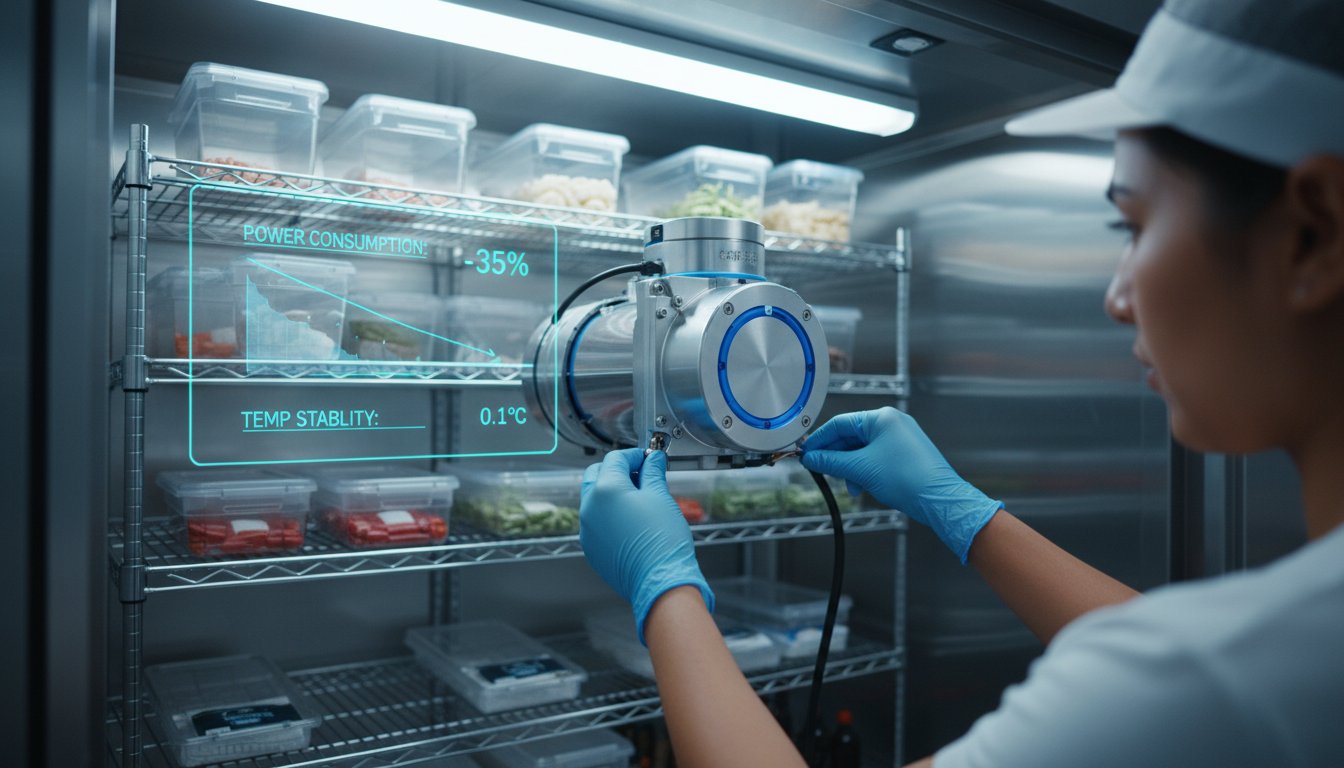
Operating a standard shaded-pole motor in your walk-in cooler can waste up to 70% of the energy it consumes as heat, forcing your compressor to work even harder to compensate. You likely already know that keeping energy costs under control in the Bay Area and Sacramento is a constant battle, especially with the tightening grip of Title 24 standards. It's a frustrating cycle where outdated hardware drives up your utility bills while increasing the risk of equipment failure during a peak summer afternoon.
In this guide, you'll discover how upgrading to an electronically commutated motor can slash your fan energy consumption by 65% while providing the superior temperature stability your inventory requires. We'll show you how this technology helps you avoid product loss and extends the lifespan of your entire system. You'll learn exactly why switching to these high-efficiency motors is the most cost-effective way to modernize your refrigeration infrastructure and secure your bottom line.
Key Takeaways
- Discover how an electronically commutated motor combines AC power with DC efficiency to slash energy consumption by up to 70% compared to traditional motors.
- Learn why the brushless architecture and integrated electronics result in lower heat output, directly improving the cooling performance of your evaporator coils.
- Navigate California’s strict Title 24 energy requirements and unlock local utility rebates that significantly reduce the upfront cost of high-efficiency upgrades.
- Gain a clear comparison between ECMs and outdated motor types to identify the best strategy for optimizing your facility’s energy management system.
What is an Electronically Commutated Motor (ECM)?
An electronically commutated motor represents the most significant advancement in refrigeration efficiency since the introduction of digital controls. At its core, an ECM is a Brushless DC electric motor that uses integrated electronic circuitry to manage speed and torque. It's a hybrid technology. It connects to a standard AC power source but operates with the high-torque efficiency of a DC motor.
The term "commutated" refers to the process of switching the direction of the electrical current to keep the motor spinning. Traditional motors used carbon brushes to achieve this. These brushes created friction, noise, and heat. ECMs replace these mechanical parts with a built-in microprocessor. This board monitors the motor's state and adjusts the magnetic field electronically. This shift eliminates the primary wear points found in older hardware.
The Evolution of Commercial Motor Technology
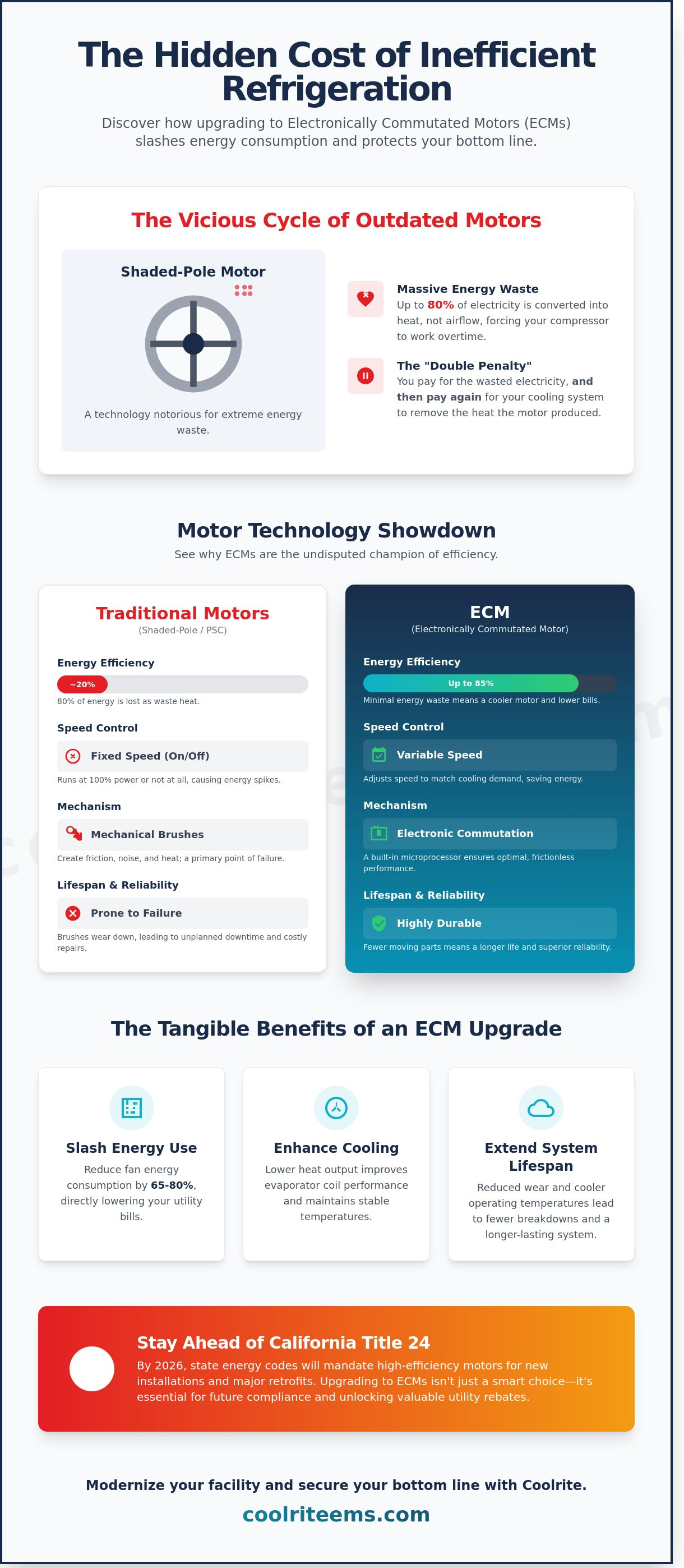
For decades, commercial refrigeration relied on shaded-pole or Permanent Split Capacitor (PSC) motors. These designs were rugged but incredibly inefficient. A standard shaded-pole motor might only convert 20% of its electrical energy into movement. The remaining 80% is lost as heat. This creates a double penalty for grocery stores and warehouses. You pay for the wasted electricity, then you pay again for your cooling system to remove the heat the motor produced.
- Mechanical Failure: Brushes in standard DC motors eventually wear down and require replacement, leading to unplanned downtime.
- Fixed Speeds: Traditional AC induction motors usually run at 100% capacity or 0%, leading to massive energy spikes and poor humidity control.
- Durability: ECMs use permanent magnets and electronic switching to reduce internal operating temperatures by up to 50 degrees Fahrenheit.
Why ECMs are Becoming the Industry Standard in 2026
Regulatory pressure in California is accelerating the move toward smart hardware. By 2026, updated energy codes will make it nearly impossible to use low-efficiency motors in new commercial installs or major retrofits. ECMs are essential for any "Total Solution" approach to energy management. They allow for variable speed control. This means the fan only spins as fast as the current load requires. This precision can reduce fan energy consumption by 65% to 80% in a typical supermarket walk-in cooler.
Modern ECMs also provide the data backbone for remote monitoring. When paired with a local PLC, these motors report performance metrics that help prevent product loss before a failure occurs. This reliability is why Coolrite EMS prioritizes ECM technology for every client looking to lower operational costs and improve system longevity. We view these motors not just as parts, but as critical energy partners in your facility.
The Technical Architecture: How ECMs Work
Traditional induction motors rely on a physical process that creates significant heat and energy waste. An electronically commutated motor changes this dynamic by combining a brushless DC motor with an integrated electronic controller. This design allows the motor to operate with the efficiency of DC power while using the standard AC power found in California commercial facilities. By removing the mechanical friction inherent in older designs, these motors achieve efficiency levels that standard shaded-pole motors cannot match.
The permanent magnet rotor is the heart of this efficiency. While older AC motors must consume electricity just to create a magnetic field in the rotor, an ECM uses permanent magnets. This eliminates "rotor loss," a common form of energy waste. In a typical supermarket setting, replacing standard evaporator fans with ECM technology can reduce fan energy consumption by up to 70%. This isn't just a marginal gain; it's a fundamental shift in how power is utilized within the refrigeration cycle.
Variable speed capability defines the modern ECM. Constant-speed motors are a relic of the past because they operate at 100% power regardless of the actual cooling demand. An ECM adjusts its RPM based on real-time needs. If a walk-in freezer reaches its set point, the motor can drop to a lower speed to maintain airflow without drawing full power. This prevents the frequent start-stop cycles that lead to equipment fatigue and high peak-demand charges on your utility bill.
Key Components: Stator, Rotor, and PCB
The stator contains stationary copper windings that receive electrical pulses to create a rotating magnetic field. A high-performance printed circuit board (PCB) manages these pulses with microsecond precision to ensure the rotor turns smoothly. The electronic commutator serves as the digital replacement for physical brushes, removing the primary cause of motor failure and electrical noise. This solid-state approach allows the motor to maintain 90% efficiency even when running at half speed.
- Permanent Magnets: These eliminate the need for induced current, reducing internal heat.
- Integrated Inverter: This component converts incoming AC power to DC for precise control.
- Ball Bearings: High-grade bearings combined with low heat output extend the motor's life to over 10 years.
The Role of Integrated Electronics
Onboard sensors act as the motor's nervous system, monitoring torque and load in real-time. If a filter becomes clogged or ice builds up on a coil, the electronics detect the change in resistance and adjust the power output to compensate. These motors use standardized protocols to communicate with a commercial refrigeration control system, enabling remote monitoring and automated energy-saving modes. Built-in safeguards also protect the hardware from voltage surges and overheating, ensuring operational continuity for critical inventory.
Benefits of ECMs in Commercial Refrigeration Systems
Switching to an electronically commutated motor represents one of the most effective upgrades a California business owner can make. These motors don't just spin fans; they transform how energy moves through your facility. By replacing inefficient AC motors with ECM technology, facilities often see a 70% reduction in fan power consumption immediately.
Unmatched Energy Efficiency and Cost Savings
The math behind ECM adoption is straightforward. A standard shaded-pole motor found in older display cases typically draws 50 to 90 watts of power to maintain airflow. In contrast, a high-efficiency ECM performs the same work while drawing only 15 to 20 watts.
For a San Francisco grocery store operating 20 evaporator fans 24 hours a day, this shift eliminates over 6,000 kWh of annual waste. These savings directly support broader energy management solutions by lowering the baseline demand of the entire building. Lowering the wattage draw reduces the strain on your electrical infrastructure, providing more headroom for other equipment.
Reduced Heat Load and Equipment Longevity
Standard motors are notoriously inefficient, converting much of their energy into heat rather than motion. This creates a "double penalty" because the refrigeration system must work harder to remove the heat the motor generates inside the refrigerated space. An electronically commutated motor operates at much lower temperatures, often 30% cooler than its AC counterparts.
This cooler operation prevents the common burnout associated with high-ambient environments. ECMs also feature "soft-start" capabilities. Instead of slamming on with a high-torque jolt, the motor ramps up speed gradually. This reduces mechanical stress and vibration across the refrigeration rack, protecting delicate copper lines from fatigue and leaks.
- Precision speed control maintains steady temperatures in walk-ins, preventing product shrinkage and spoilage.
- Quiet operation creates a better environment for shoppers in retail display areas by reducing humming and rattling.
- Lower vibration levels extend the life of fan blades and mounting brackets, reducing maintenance calls.
- Integrated electronics allow the motor to maintain constant airflow even as coils accumulate frost or filters get dirty.
By investing in ECM technology, you're not just buying a motor. You're implementing a precision tool that protects your inventory and your bottom line. The reduction in heat and vibration ensures that your entire refrigeration system runs more reliably for years to come.
ECMs vs. Traditional Motors and VFDs
Traditional shaded pole motors are essentially space heaters that happen to turn a fan. In a typical supermarket reach-in case, these motors operate at a staggering 20% to 25% efficiency. This means 75% of the electricity you pay for is converted directly into heat, which your refrigeration system must then work harder to remove. Permanent Split Capacitor (PSC) motors offer a slight improvement, reaching around 60% efficiency, yet they still lag significantly behind the 80% to 90% benchmarks set by the modern electronically commutated motor.
ECM vs. Shaded Pole and PSC Motors
The efficiency gap between these technologies isn't just a technical detail; it's a major operational cost. Shaded pole motors rely on a simple but wasteful design that creates a constant internal "slip," generating excessive heat. PSC motors use a run capacitor to improve efficiency, but they're still limited by their fixed-speed nature. An ECM uses permanent magnets and an internal microprocessor to eliminate the energy losses found in induction motors.
- Energy Waste: Shaded pole motors lose 75% of input power to heat; ECMs lose less than 20%.
- Retrofit Ease: Most 1/15 HP or 1/20 HP fan motors can be swapped for an ECM without structural modifications.
- Heat Load: Upgrading to ECMs reduces the heat load inside the refrigerated space, lowering the demand on your compressors by up to 10%.
Retrofitting these units is a seamless process for most California businesses. Because the electronically commutated motor maintains high torque and efficiency even at low speeds, it doesn't suffer the same heat-related degradation that causes PSC motors to fail prematurely when throttled. This reliability is critical for maintaining the tight temperature tolerances required in food service and pharmaceutical storage.
Integrated Control vs. External VFDs
While Variable Frequency Drives (VFDs) provide excellent control for large-scale 50HP compressors, they require external mounting, additional wiring, and complex programming. An ECM integrates the drive electronics directly into the motor housing. This "all-in-one" design simplifies commercial refrigeration service by reducing the number of failure points in the system. For evaporator fans and small condensers, the integrated approach is the most cost-effective choice.
The brushless design of an ECM removes the physical contact points that lead to mechanical wear. Without brushes to replace or friction-induced heat to manage, these motors frequently double the service life of their predecessors. You'll see fewer emergency calls and more consistent temperatures across your inventory. By eliminating the friction and arcing associated with traditional brushes, the motors run cooler and quieter, which is a noticeable benefit in customer-facing retail environments.
Operating at reduced speeds during the "off-cycle" allows the ECM to keep air moving without consuming full power. This prevents temperature stratification in walk-in coolers while using only a fraction of the energy required by a standard motor. It's a total solution for operators looking to stabilize their energy bills and protect their equipment longevity.
Implementation and California ROI Considerations
Adopting high-efficiency hardware is a strategic necessity for California facility managers facing rising utility rates and tightening climate mandates. Integrating an electronically commutated motor into your refrigeration rack or walk-in cooler provides an immediate reduction in kilowatt-hour consumption. However, the true financial return depends on how these motors interact with your broader energy management strategy and state compliance requirements.
Meeting California’s Strict Energy Standards
California Title 24, Part 6 sets the gold standard for energy efficiency in the United States. For commercial refrigeration, these regulations demand that fan motors under 1 HP maintain high efficiency levels to reduce the state's peak grid load. ECMs are the primary hardware solution for meeting CA refrigeration fan power limits. Beyond simple installation, your facility must provide documented energy performance data during state inspections to prove ongoing compliance.
- Compliance Certainty: ECMs meet the 70% efficiency threshold required for most small-motor applications under Title 24.
- 2026 Rebate Windows: Utility providers like PG&E and SMUD have updated their 2026 incentive catalogs to favor integrated motor controls.
- Reduced Heat Load: Because these motors run cooler, they decrease the work required by the compressor, creating a secondary layer of energy savings.
Maximizing ROI with CoolriteEMS Integration
Standard motors often run at 100% capacity regardless of the actual cooling demand. This waste adds up quickly. The CoolriteEMS Controller transforms a standard electronically commutated motor into a smart asset by modulating fan speed based on real-time pressure and temperature data. Our PLC-based system functions locally, so your fans keep spinning efficiently even if your facility's internet goes down.
We believe you should own your efficiency data. CoolriteEMS operates on a no-subscription model, meaning you won't pay monthly fees to access your own performance metrics or adjust your control logic. This approach ensures that the $5,000 to $15,000 saved annually in energy costs stays in your pocket rather than being diverted to software overhead. Our system also monitors motor health, sending immediate SMS alerts if a fan fails. This prevents product loss before temperatures reach a critical threshold.
Real-World Use Case: Sacramento Warehouse Efficiency
A 12,000 square foot cold storage facility in Sacramento recently overhauled its evaporator fans to address a $4,200 monthly power bill. By replacing 18 shaded-pole motors with ECMs and installing the CoolriteEMS platform, they achieved a 34% reduction in fan energy consumption within the first 90 days. The project qualified for a $2,400 SMUD rebate, which shortened their total return on investment to just 14 months. They now maintain tighter temperature tolerances while spending less on every cooling cycle.
Ready to optimize your facility's performance? Contact Coolrite EMS today to schedule a professional audit and see how our subscription-free controllers can maximize your equipment's lifespan.
Maximize Your Commercial Refrigeration ROI
Upgrading to an electronically commutated motor isn't just about modernizing your equipment. It's a strategic move to slash energy consumption by up to 70% compared to outdated shaded-pole motors. California commercial operators face strict Title 24 requirements, making these high-efficiency upgrades essential for long-term compliance and operational stability.
CoolriteEMS delivers a total solution that pairs these advanced motors with local PLC control. This ensures your system stays online without internet dependence or recurring monthly subscription fees. You'll benefit from:
- Full California Title 24 compliance backed by our deep technical expertise.
- Zero monthly fees for our secure, local energy management platform.
- On-site support and installation from our specialized Northern California teams.
We've helped local grocery stores and warehouses transform their utility bills into manageable assets. Our team handles everything from initial design to 24/7 emergency response, ensuring your inventory stays protected. Request a CoolriteEMS Demo to See How ECMs Can Cut Your Energy Bills today. Your facility deserves the reliability of a precision-engineered system that pays for itself through immediate energy savings.
Frequently Asked Questions
How much can a business save by switching to ECMs?
Businesses typically reduce evaporator fan energy consumption by 65% to 80% when upgrading to an electronically commutated motor. For a standard grocery store operating 20 walk-in fans, this translates to annual savings of approximately $1,200 in electricity costs. These motors generate less heat than shaded-pole alternatives, which reduces the cooling load on your compressor by an additional 15%. This double-sided efficiency ensures a rapid return on investment.
Can I retrofit my existing walk-in cooler with ECMs?
Yes, you can retrofit almost any existing walk-in cooler or freezer with high-efficiency ECMs. Most units use standard NEMA frame sizes, allowing for a seamless drop-in replacement of older shaded-pole or permanent split capacitor motors. Our technicians often complete these upgrades during routine preventative maintenance visits. This upgrade is a core component of a total solution approach to modernizing aged commercial refrigeration infrastructure without replacing the entire walk-in unit.
What is the difference between an EC motor and a regular DC motor?
The primary difference is that an electronically commutated motor includes an integrated circuit board that converts AC power to DC internally. While a standard DC motor requires external brushes to switch the magnetic field, an ECM uses electronic sensors to manage this process. This brushless design eliminates the friction and sparking associated with traditional DC motors. It results in a motor that is 30% more efficient and significantly more reliable over long-term operation.
Why are ECMs required for Title 24 compliance in California?
California Title 24, Part 6, mandates ECMs because they drastically lower the state's energy grid demand through superior efficiency standards. Since January 1, 2023, regulations require fan motors under 1 horsepower in refrigerated warehouses to use these high-efficiency designs. Adhering to these standards helps operators avoid costly fines. It also positions your facility as a sustainable, forward-thinking business that prioritizes energy management and reduced operational overhead.
Do ECMs require special maintenance or software?
ECMs don't require specialized software for basic operation, but they do benefit from integration with a smart energy management system. Unlike older motors that need frequent lubrication, these units feature sealed bearings that are maintenance-free for their entire lifespan. You won't need to manage complex code; however, professional configuration ensures the motor speeds are optimized for your specific cooling load. This setup prevents equipment failure and maximizes your energy savings.
How long do electronically commutated motors typically last?
An electronically commutated motor typically lasts 45,000 to 50,000 hours, which is nearly double the lifespan of a traditional shaded-pole motor. The absence of physical brushes reduces internal wear and heat buildup, which are the primary causes of motor burnout. Because they run cooler, the internal components remain stable for a decade or more under normal conditions. This longevity makes them a secure, long-term investment for any commercial refrigeration or HVAC system.
Are ECMs louder than traditional refrigeration motors?
No, ECMs are significantly quieter than traditional motors due to their controlled startup and smooth speed transitions. They eliminate the loud clunk often heard when shaded-pole motors kick on at full power. You'll notice a 10 to 15 decibel reduction in ambient noise levels. This makes them ideal for retail environments or restaurants where a quiet atmosphere is essential for customer comfort and a professional setting.
Do I need a VFD if I already have an ECM?
You don't need a Variable Frequency Drive (VFD) because the variable speed control logic is already built into the ECM's internal electronics. A VFD is used to control the speed of traditional AC induction motors, but it's redundant when using an ECM. By using an ECM, you simplify your electrical setup and reduce the number of potential failure points. This streamlined configuration offers better reliability and lower installation costs for your commercial refrigeration control system.
Related: See our transparent pricing for refrigeration repair, browse customer success stories, or get a quote at your local service area.