What if your refrigeration system is working twice as hard as it needs to simply because your walls are leaking money? In the Central Valley, where summer temperatures regularly exceed 100°F for over 30 days a year, the thermal integrity of your facility isn't just a technical detail; it's a financial necessity. You understand that every degree of heat infiltration forces your compressors to run longer, driving up utility costs and risking premature equipment failure.
This guide clarifies the technical differences between walk-in cooler panels and freezer insulation to help you ensure Title 24 compliance and maximum energy efficiency. By choosing the right materials, you can secure a durable cold storage solution that lasts 20 years or more while keeping your operational costs predictable. We will examine how specific R-values, such as the R-25 standard for coolers, impact your long-term energy management and protect your inventory from the California heat.
Key Takeaways
- Learn how to select the most efficient cooler panels by comparing the thermal performance and structural longevity of PUR, PIR, and EPS insulation materials.
- Identify the specific R-value thresholds and panel thickness requirements necessary to maintain full compliance with California’s strict Title 24 energy standards.
- Understand the critical design differences between walk-in refrigeration and freezer panels to ensure your facility is built to handle its specific thermal load.
- Discover how integrating a smart controller acts as the "brain" of your facility, detecting panel seal leaks and insulation failures before they cause product loss.
- Gain actionable insights into optimizing your cold storage infrastructure to reduce high energy bills and extend the operational life of your refrigeration equipment.
Understanding Walk-In Cooler Panels: The Backbone of Cold Storage
Every high-performance refrigeration system relies on the integrity of its thermal envelope. A cooler panel is a modular, high-density insulation unit designed for thermal stability. These components, professionally known as insulated metal panels (IMPs), serve as both the structural walls and the primary thermal barrier for your facility. Without a precision-engineered panel system, even the most advanced energy management system cannot maintain consistent temperatures.
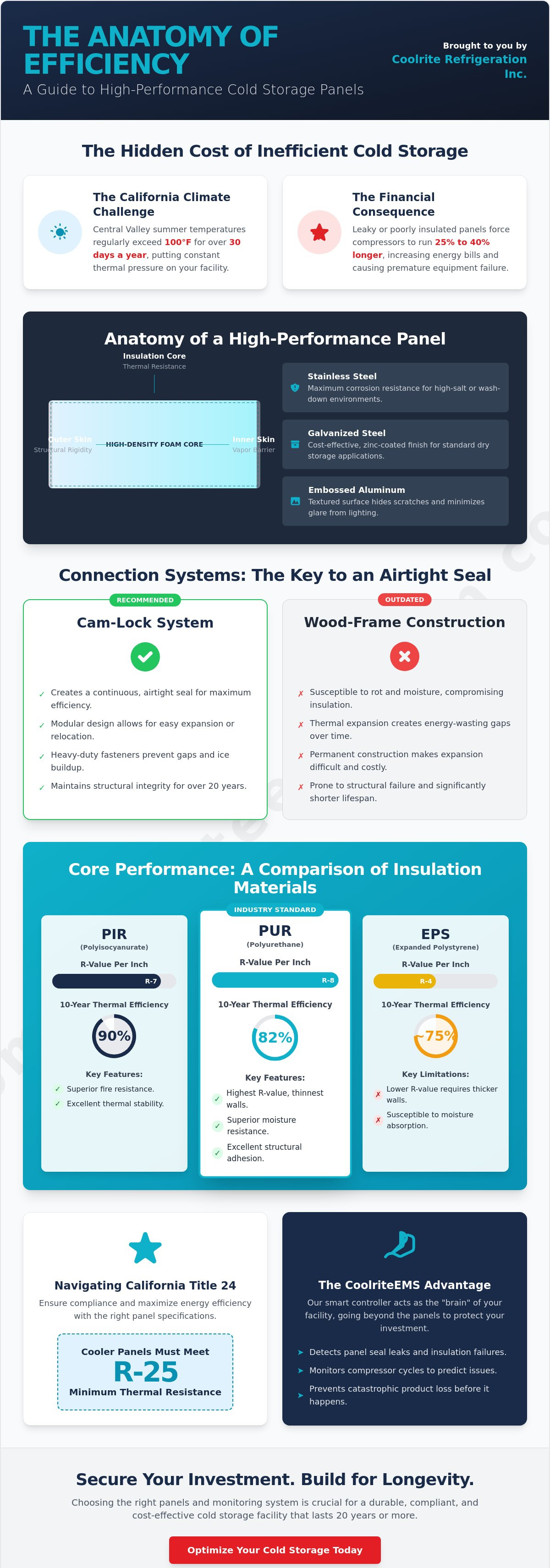
Panel integrity is the primary factor in preventing compressor burnout. When cooler panels lose their seal, the refrigeration unit must run 25% to 40% longer to compensate for heat gain. This constant cycling creates mechanical fatigue and spikes energy costs. Maintaining a tight "skin and core" anatomy ensures that the insulation core remains protected from moisture, which is essential for long-term operational continuity.
The Anatomy of a High-Quality Panel
The industry standard for durability is 26-gauge steel. This thickness provides the structural rigidity needed to withstand the daily impact of carts and crates in a busy commercial kitchen. Most premium installations utilize the engineering principles of Structural Insulated Panels (SIPs) to bond the metal skins to a high-density foam core, creating a seamless thermal break.
- Stainless Steel: Offers maximum corrosion resistance for high-salt environments.
- Galvanized Steel: Provides a cost-effective, zinc-coated finish for standard dry storage.
- Embossed Aluminum: Features a textured surface that hides scratches and minimizes glare.
A built-in vapor barrier is essential for preventing interstitial condensation. If moisture penetrates the panel core, the R-value drops significantly and can lead to mold growth. High-quality cooler panels use non-permeable skins to ensure the insulation stays dry and effective for the life of the equipment.
Connection Systems: Cam-Lock vs. Wood-Frame
Modern commercial refrigeration has largely moved away from wood-frame panels. Wood is susceptible to rot and thermal expansion, which eventually creates gaps in the insulation. In contrast, cam-lock systems use heavy-duty pull-down fasteners to draw panels together. This creates an airtight seal that optimizes energy efficiency and prevents ice buildup around the door frames.
San Francisco businesses prefer modular cam-lock systems for their flexibility. Because these panels don't rely on permanent adhesives or heavy framing, they allow for easy relocation or expansion. If a grocery store or warehouse needs to increase its footprint, technicians can add new sections to the existing structure without a full decommissioning process. This modularity is a core component of a total solution approach to facility management.
Insulation Materials: Comparing PUR, PIR, and EPS Performance
Selecting the right cooler panels starts with understanding R-value. This metric measures a material's thermal resistance; the higher the number, the better the insulation. In a high-demand environment like a San Jose food distribution hub, higher R-values translate directly to lower compressor run times. While PIR and PUR are the industry leaders, EPS remains a tempting but often problematic budget choice for long-term facilities.
Polyisocyanurate (PIR) and Polyurethane (PUR) both offer high performance for heavy-duty applications. PIR provides superior fire resistance and slightly better thermal stability. Over a 10-year operational span, PIR insulation maintains approximately 90% of its thermal efficiency while PUR often drops to 82% due to gas diffusion within the cells. This difference impacts long-term energy management systems and overall ROI.
Polyurethane (PUR): The Gold Standard for Bay Area Coolers
PUR delivers an impressive R-value of R-7 to R-8 per inch. This allows for thinner walls without sacrificing thermal integrity. It bonds exceptionally well to metal skins, creating a rigid, structural panel that withstands the vibration of heavy refrigeration cycles. In San Jose, where coastal humidity can reach 75% or higher, PUR's closed-cell structure prevents moisture from compromising the core. Key benefits include:
- Stronger adhesion to steel or aluminum skins for better structural support.
- Superior moisture resistance in high-humidity coastal environments.
- Reduced footprint due to higher thermal density.
The Limitations of Expanded Polystyrene (EPS)
EPS is a common choice for low-budget projects, but it's often a false economy. With an R-value of only R-3.6 to R-4.2, you need walls nearly twice as thick to match PUR performance. EPS is also more porous. If the vapor barrier fails, moisture enters the core and freezes. This icing can increase energy consumption by 30% and eventually lead to structural failure. Use EPS only for:
- Temporary cold storage structures with a lifespan of less than 3 years.
- Dry storage areas that don't require strict temperature control.
- Budget-restricted projects where upfront capital is the only priority.
Integrating these high-performance materials into a smart refrigeration controller setup ensures your facility operates at peak efficiency while protecting your bottom line.
Walk-In Cooler Panels vs. Freezer Panels: Key Differences
Selecting the wrong insulation thickness is a common mistake that compromises efficiency and equipment lifespan. While both serve to maintain temperature, freezer panels require significantly higher thermal resistance. Standard cooler panels are 4 inches thick, typically achieving an R-25 rating. Freezers must utilize 5-inch or thicker panels to meet the R-32 threshold required by California energy codes.
Attempting to save costs by using 4-inch panels in a freezer application leads to catastrophic failure. The insulation won't stop heat transfer, causing the compressor to run constantly. This results in premature motor burnout and massive ice accumulation within the panel core. For a deeper look at hardware selection, consult the comprehensive buying guide for commercial refrigeration equipment in California.
Thermal Resistance and Heat Leakage
Sub-zero temperatures inside a freezer create a phenomenon called vapor drive. High-pressure warm air outside tries to force moisture through every seam. If the panel seal fails, moisture freezes inside the insulation, expanding and destroying the panel's structural integrity. This is why freezer configurations also require heavy-duty floor insulation to prevent the ground from freezing and heaving, which can crack a facility's foundation.
The energy cost of insufficient insulation is high. In a Sacramento summer where ambient temperatures hit 105°F, the 1-inch difference between a 4-inch and 5-inch panel can increase energy consumption by 18%. Integrating a smart energy management system helps track these losses, but the physical barrier remains your first line of defense against high utility bills and product loss.
Structural Integrity in Sub-Zero Environments
Freezer panels must include pressure relief valves to maintain structural stability. When a door closes, the rapid cooling of air creates a vacuum. Without a valve, this pressure can buckle the cooler panels or make the door impossible to open. Reliability depends on these small but critical components working in tandem with your refrigeration plant.
- Gasket Technology: We use specialized materials that stay flexible at -10°F to ensure an airtight seal.
- Heated Door Frames: These are essential for preventing ice-up. Low-wattage heaters stop condensation from freezing the door shut.
- Vapor Barriers: High-grade sealants prevent moisture ingress in high-humidity environments like coastal California.
Properly specified panels ensure your commercial refrigeration control systems don't have to overcompensate for heat gain. This proactive approach to infrastructure reduces the load on your compressors and extends the life of your entire cooling plant. If you want to see how modern controls can further optimize your facility, contact us for a demo of our bespoke energy solutions.
Navigating California Title 24 and Energy Efficiency Standards
California's Building Energy Efficiency Standards, known as Title 24, Part 6, represent some of the most rigorous refrigeration codes in the United States. For facility managers, selecting compliant cooler panels isn't just about performance; it's about avoiding legal and financial setbacks. Under the 2022 update, walk-in coolers and freezers under 3,000 square feet must adhere to strict R-value mandates to reduce grid strain.
For these smaller installations, the state requires a minimum R-value of R-25 for coolers and R-32 for freezers. If you're operating in Oakland or San Jose, local inspectors will verify these ratings before signing off on your permit. Installing uncertified panels is a high-risk gamble that often leads to failed inspections and the expensive task of replacing non-compliant materials. Title 24 requires automatic door closers on all walk-ins to ensure the refrigerated envelope remains sealed.
Compliance Checklist for Northern California Businesses
- NSF Certification: Verify that your panels carry the National Sanitation Foundation mark to guarantee they meet food safety and sanitation standards.
- UL-Listed Flame Spread: Panels must meet California fire codes, typically requiring a Class 1 rating for flame spread and smoke development.
- Smart Energy Components: Incorporating energy management systems helps track real-time performance, which is vital as California moves toward more aggressive decarbonization goals.
Combating the Sacramento Heat: Panel Efficiency
Outdoor temperatures in Sacramento frequently climb above 100°F during the summer months. These extreme ambient conditions force refrigeration systems to work harder, increasing the risk of equipment fatigue. Choosing 5-inch thick cooler panels instead of the standard 4-inch variety can significantly improve your return on investment by reducing heat gain by up to 20%.
This extra inch of insulation acts as a critical barrier against the Central Valley sun, protecting your inventory and lowering energy costs. For expert guidance on selecting and placing these units, consult our guide on walk-in cooler installation near me to ensure your project meets all local environmental demands.
Stop wasting money on inefficient cooling and avoid the headache of code violations. Contact Coolrite EMS today to secure a total solution for your commercial refrigeration needs.
Optimizing Performance: Beyond the Panels with CoolriteEMS
High-performance cooler panels provide the necessary insulation for your facility, but they cannot manage themselves. Even the best-engineered panels fail to deliver ROI if the refrigeration system lacks a smart controller. Without intelligent oversight, a minor seal leak or a door left slightly open leads to massive energy waste and mechanical strain. The CoolriteEMS Controller acts as the brain of your walk-in. It detects panel seal leaks by analyzing subtle temperature fluctuations that occur when warm air infiltrates the space. This total solution approach pairs high-quality cooler panels with customizable control logic to identify structural issues before they result in a total system breakdown. Operational costs drop significantly when you address human error. Our system provides real-time SMS and email alerts for door-ajar events, ensuring that your staff can react immediately. This prevents the refrigeration units from overworking, which protects the compressor and maintains the integrity of your thermal envelope.Remote Monitoring and Product Protection
Security is a priority for California facilities. Our system utilizes secure, internet-free PLC control to maintain local operational integrity, which keeps your data safe from external threats. This hardware-first approach ensures that your facility remains functional even if your local network goes down. Real-time alerts prevent massive inventory loss during panel or door failures. For example, a San Francisco grocery store recently saved $10,000 in inventory because our system detected a failed door gasket at 3:00 AM. The manager received an instant notification and secured the product before temperatures reached the danger zone.Sustainable Refrigeration: The Future of California Business
California businesses face rising utility costs and strict environmental mandates. CoolriteEMS helps you meet these challenges by eliminating monthly subscription fees for energy management. You own the hardware and the data, which removes unnecessary recurring expenses from your balance sheet. Our custom logic optimizes defrost cycles based on real-time needs rather than simple timers. This reduces thermal stress on your panels and prevents ice buildup that can damage the structure over time. By managing the system with precision, you extend the lifespan of your entire refrigeration suite. Contact Coolrite today for a demo of the energy management solutionsFuture-Proof Your Cold Storage Strategy
Selecting the right cooler panels is the first step toward meeting California Title 24 standards, which mandate specific R-values for all walk-in installations. Whether you opt for PIR for its fire resistance or PUR for its thermal performance, it's a choice that directly impacts your facility's energy profile. Proper insulation is critical, as it helps prevent the 20% energy loss often found in aging commercial refrigeration systems.
Coolrite positions your business for success by combining these structural components with our proprietary, no-subscription EMS technology. As Title 24 compliance experts, we provide a total solution that includes 24/7 emergency support across Northern California. This ensures your facility maintains peak efficiency while avoiding the product loss associated with equipment downtime. You don't have to navigate complex energy regulations alone.
Taking the time to optimize your infrastructure today ensures your operations remain profitable and compliant well into the future.
Frequently Asked Questions
What is the standard R-value for walk-in cooler panels in California?
California Title 24 regulations require a minimum R-value of R-25 for walk-in cooler panels. This standard ensures that your facility maintains thermal efficiency and reduces the workload on your refrigeration system. For freezer applications, the requirement increases to R-32 to prevent heat gain in sub-zero environments.
Can I use cooler panels for a walk-in freezer if I add more insulation?
You shouldn't use standard cooler panels for a freezer because they lack the necessary thickness and thermal break design. Most cooler panels are 4 inches thick, while freezer panels require at least 5 inches of high-density foam to prevent ice formation. Using the wrong panels can lead to a 15% increase in energy consumption and potential structural damage from frost heave.
How long do commercial cooler panels typically last before needing replacement?
High-quality cooler panels generally last between 15 and 20 years with professional maintenance. You'll notice performance drops after the 15-year mark as the insulation's R-value naturally degrades or the metal skins begin to delaminate. Replacing panels before they fail completely prevents product loss and keeps your energy bills from spiking due to thermal leakage.
Do I need a permit to replace walk-in cooler panels in San Jose?
Yes, the San Jose Building Division requires a mechanical permit for any structural modifications or equipment replacements in commercial kitchens and warehouses. This process ensures your new installation meets current California Energy Code standards and local safety requirements. Failing to secure a permit can lead to significant fines and issues during routine health department inspections.
What is the difference between cam-lock and slip-joint panels?
Cam-lock panels feature internal pull-tight locking mechanisms that create a superior airtight seal between sections. Slip-joint panels rely on a friction fit and external fasteners, which are often less effective at preventing air infiltration. We recommend cam-lock systems for commercial facilities because they offer 20% better airtightness and allow for easier expansion or relocation in the future.
How do I detect a leak in my walk-in cooler panels?
Check for ice buildup along the panel seams or persistent condensation on the exterior surfaces of the unit. You can also use a thermal imaging camera to pinpoint specific spots where cold air is escaping through the insulation. Identifying these leaks early protects your energy management system from overworking and prevents 24/7 compressor cycling that leads to premature equipment failure.
Are used cooler panels worth the savings for a new restaurant?
Used panels rarely deliver real value because they often contain hidden moisture, mold, or compromised foam cores. A panel that is 10 years old may have already lost 30% of its original thermal efficiency, leading to higher monthly utility costs. Investing in new, high-efficiency panels ensures your facility complies with California's strict energy laws and provides a reliable environment for your inventory.
What maintenance is required for cooler panel gaskets?
Clean your gaskets monthly using warm water and mild soap to remove debris and prevent mold growth. You should inspect the seals every 90 days for cracks, tears, or hardening that might prevent a proper seal. Replacing worn gaskets immediately is a cost-effective way to maintain the efficiency of your smart refrigeration controller and prevent unnecessary energy waste.
Related: See our transparent pricing for refrigeration repair, browse customer success stories, or get a quote at your local service area.