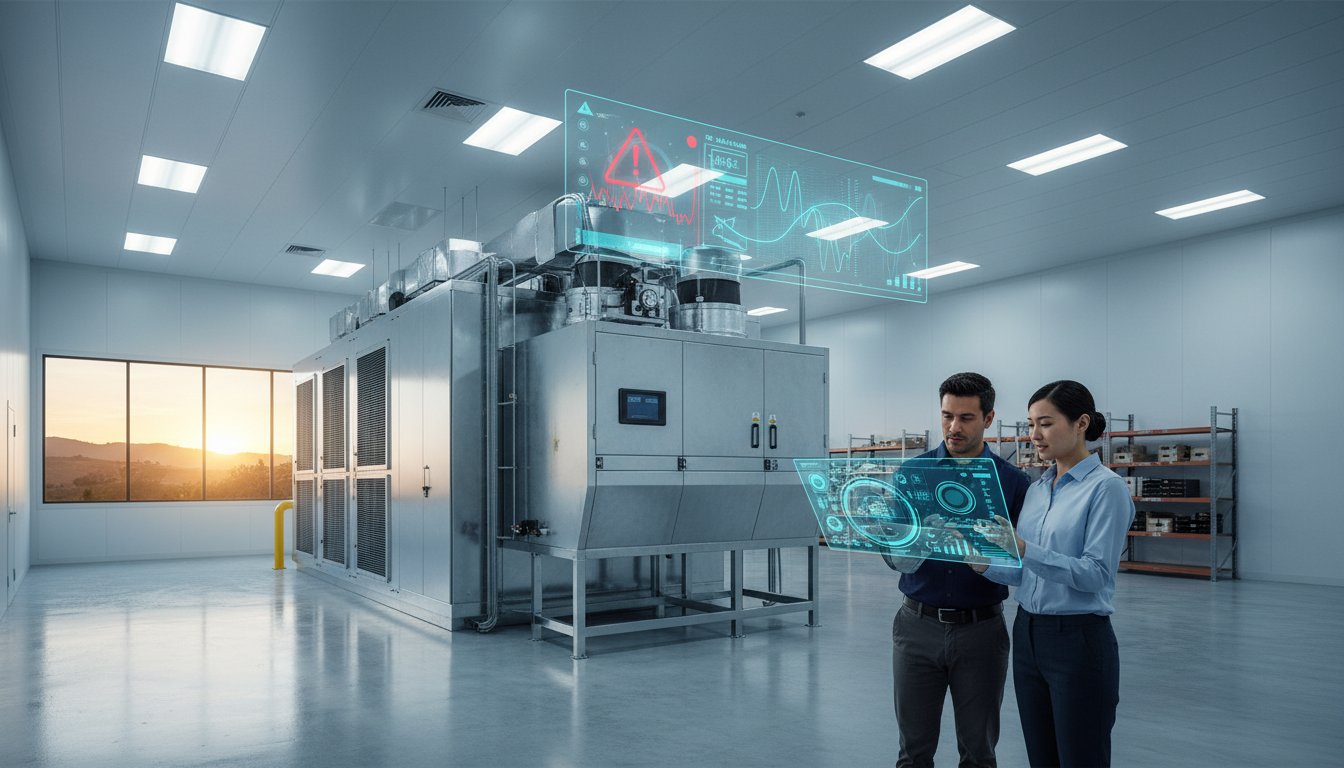
That emergency call for air cooler repair at 2:00 AM isn't just a maintenance failure. It's a symptom of an outdated management strategy that costs California commercial facilities thousands in preventable product loss and emergency labor rates every year.
You likely understand the frustration of paying for "expert" fixes in San Jose only to see the same evaporator icing up three weeks later. It's difficult to manage rising utility bills while worrying if your Sacramento warehouse will meet the strict 2026 energy compliance standards.
This guide exposes the five expensive myths currently draining your operational budget and shows you how intelligent, local PLC monitoring provides a permanent solution. You'll learn how to restore consistent cooling and avoid future emergency costs through technical precision.
We'll examine why reactive maintenance fails and how secure, subscription-free controls ensure your cooling systems remain optimized. By moving beyond traditional repairs, you can ensure 24/7 uptime and total operational continuity for your critical infrastructure.
Key Takeaways
- Learn to identify common industrial myths that lead to unnecessary air cooler repair expenses and avoidable equipment downtime.
- Understand the technical distinctions between residential units and commercial air handlers to better manage your facility's specific cooling demands.
- Master a professional emergency checklist to troubleshoot power issues and controller error codes before scheduling an expensive service call.
- Discover how local PLC control logic prevents the mechanical failures caused by the reactive "service call cycle" common in California businesses.
- Explore how the CoolriteEMS solution provides secure, internet-free monitoring to reduce energy costs and eliminate monthly subscription fees.
Understanding Commercial Air Cooler Repair in California
The commercial air cooler acts as the heart of your walk-in refrigeration system. It's the critical component responsible for heat exchange, ensuring your inventory stays within a precise temperature range. While many people look at basic residential units to understand how air coolers work, industrial air handlers are far more complex. These systems manage high-density cooling loads that residential evaporative coolers simply can't handle.
California's diverse climate dictates your specific air cooler repair requirements. In San Francisco, humidity levels often exceed 80%, which frequently leads to evaporator coil icing and airflow blockages. Conversely, Sacramento businesses face 105-degree summer peaks that put immense mechanical stress on fan motors. Understanding these regional environmental factors is the first step in maintaining a reliable cold chain and protecting your bottom line.
Maintaining these units is about more than just temperature. It's about inventory value. A single failure in a supermarket walk-in can result in the loss of $50,000 in perishable goods within hours. Professional maintenance ensures your system meets strict food safety standards while operating at peak efficiency.
Common Components That Require Service
- Evaporator coils: These are the primary failure point. Dust buildup or refrigerant leaks here will slash your cooling efficiency by 20% or more.
- Fan motors and blades: We monitor these for vibration and heat. Identifying mechanical wear early prevents a total motor seize during a heatwave.
- Drain lines and pans: Clogged drains lead to standing water and biological growth. This creates health code risks and potential water damage to your facility.
The High Cost of Delayed Maintenance
Ignoring a small refrigerant leak is a recipe for disaster. When refrigerant levels drop, the compressor must work twice as hard to compensate, often leading to a total mechanical failure. Replacing a compressor is a major capital expense that could have been avoided with a simple air cooler repair early on.
Dirty cooling components also directly impact your utility costs. Data from PG&E suggests that poorly maintained refrigeration systems can increase monthly energy bills by 25% to 35%. Efficiency isn't just a buzzword; it's a financial necessity for California business owners.
Emergency commercial refrigerator repair typically costs 3x more than a planned service call. Between after-hours labor rates and the potential for lost product, waiting for a breakdown is the most expensive way to run a business. Coolrite EMS focuses on proactive solutions that keep your infrastructure running without the stress of unexpected downtime.
Our team provides bespoke energy management solutions that prevent failures before they happen. Contact Coolrite EMS today for a professional system audit and ensure your California facility stays compliant and efficient.
Debunking 5 Common Myths About Air Cooler Repair
Misconceptions about commercial refrigeration often lead to deferred maintenance and inflated utility bills. In California's demanding climate, operating on faulty assumptions can result in catastrophic inventory loss. Understanding the technical reality of your cooling system is the first step toward operational efficiency.
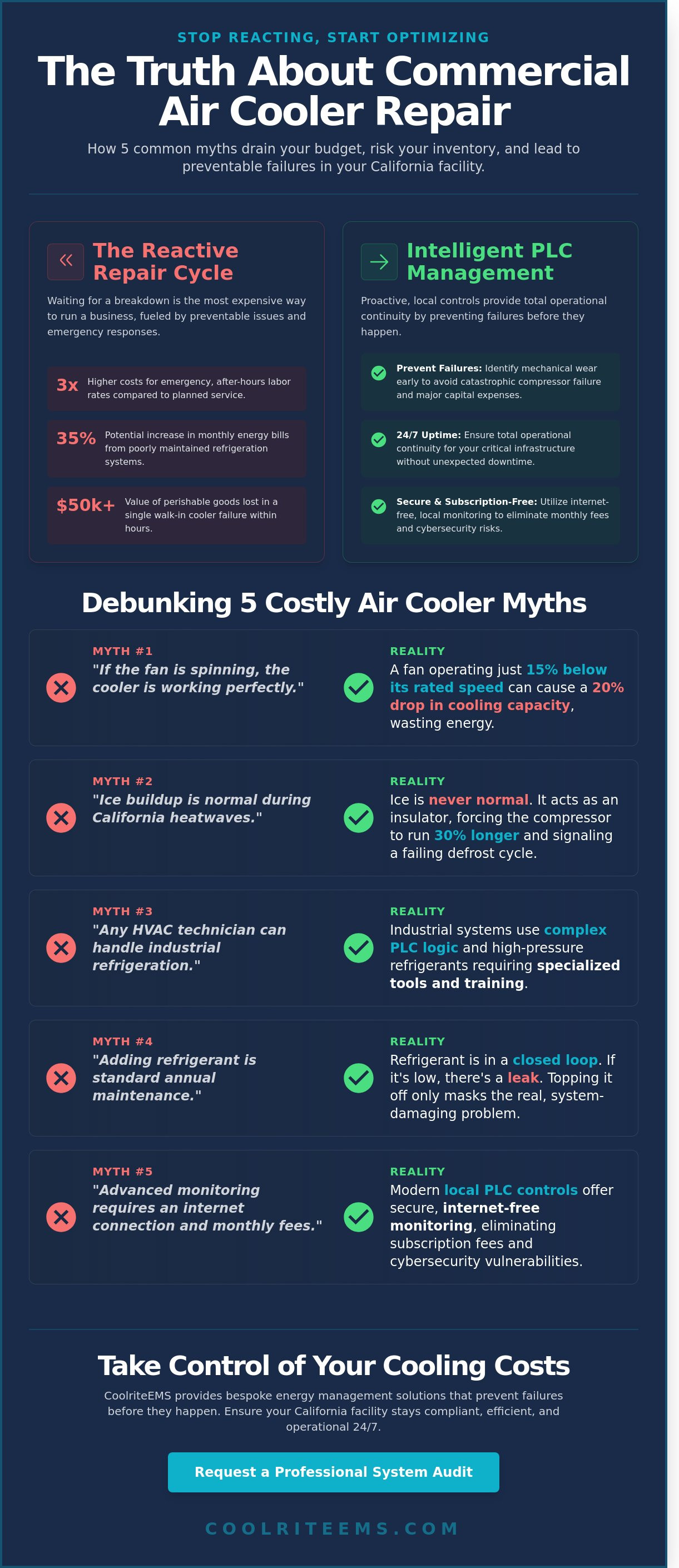
- Myth 1: "If the fan is spinning, the cooler is working perfectly." A spinning fan only indicates the motor has power. It doesn't account for motor drag, blade pitch issues, or reduced RPMs that fail to move sufficient air across the evaporator. A fan operating at 15% below its rated speed can cause a 20% drop in cooling capacity.
- Myth 2: "Ice buildup on the coils is normal during California heatwaves." Ice is never normal. It acts as an insulator, preventing heat exchange. In 100°F weather, ice buildup usually signals a failing defrost cycle or a restricted airflow issue that forces the compressor to run 30% longer than necessary.
- Myth 3: "Any HVAC technician can handle industrial refrigeration repairs." Industrial systems utilize complex PLC logic and high-pressure refrigerants. A standard residential HVAC technician may lack the specialized tools or knowledge required for air cooler repair on high-voltage commercial infrastructure.
- Myth 4: "Adding more refrigerant is a standard annual maintenance task." Refrigerant does not evaporate or wear out. If a system is low, there is a physical breach in the line. Topping off a unit without fixing the leak is a temporary fix that leads to long-term hardware damage.
- Myth 5: "Repairing old units is always cheaper than upgrading controls." Legacy mechanical controls are notoriously inefficient. Upgrading to modern energy management systems often provides a return on investment within 14 months through reduced energy consumption and fewer emergency service calls.
Why DIY is Dangerous for Commercial Units
Attempting a DIY air cooler repair on a commercial walk-in or warehouse system presents significant safety risks. These units often run on 460V three-phase power, which poses a lethal electrical shock hazard to untrained personnel. Beyond physical danger, improper cleaning techniques can be costly. Using high-pressure washers on sensitive evaporator fins often bends the aluminum slats, permanently reducing heat transfer efficiency. Additionally, unauthorized repairs typically void manufacturer warranties on compressors and electronic expansion valves, leaving the business owner liable for the full cost of replacement.
The Truth About Refrigerant Leaks
Refrigerant operates in a hermetically sealed, closed-loop system. Any loss of pressure indicates a leak that must be identified and sealed. Ignoring these leaks is no longer just a maintenance oversight; it is a regulatory liability. Under California's 2025 Energy Code, businesses face stricter oversight regarding refrigerant emissions and system efficiency. Utilizing real-time monitoring solutions identifies pressure drops before they trigger high-temperature alarms. This proactive approach prevents product spoilage and ensures your facility remains compliant with state environmental mandates. Reliable monitoring transforms a reactive repair cycle into a predictable, managed process.
The Real Cost: Reactive Repair vs. Intelligent Management
Many California businesses remain trapped in a relentless "Service Call Cycle." This pattern involves waiting for a system to fail before calling for an air cooler repair. It's a reactive approach that keeps facility managers in a state of constant financial drain and operational uncertainty.
Technical data suggests that poor control logic and unoptimized cycles cause 70% of avoidable mechanical failures. When your system operates with outdated controls, it works harder than necessary. This leads to premature component wear, shortened equipment lifespan, and frequent emergency visits that disrupt your daily operations.
There's a fundamental difference between standard refrigeration service and proactive energy management. While a standard service call simply replaces a broken part, an Energy Management System (EMS) addresses the root cause. It transforms your cooling infrastructure into an intelligent, self-monitoring asset.
The Hidden Drain on Your Bottom Line
Emergency labor costs for technicians in the Bay Area often reach premium rates during peak summer months. These expenses are only the beginning of the financial impact. A single $500 part failure can easily lead to a $10,000 inventory loss if a walk-in freezer or warehouse bay loses temperature overnight.
Energy spikes are another silent killer of profitability. Struggling, unmaintained air coolers consume significantly more power as they fight to reach setpoints through iced coils or faulty sensors. Compliance is also a legal necessity. Adhering to California HVAC maintenance regulations requires documented inspections and timely repairs to ensure workplace safety and air quality for your employees.
How CoolriteEMS Changes the Equation
CoolriteEMS shifts the strategy from "Wait for Failure" to "Predictive Maintenance." Our system uses local PLC control that doesn't rely on an internet connection to keep your inventory safe. This ensures your air cooler repair needs are identified before they become emergencies, saving you from expensive after-hours calls.
- Real-time SMS and email alerts catch temperature swings the moment they happen.
- Optimized defrost cycles reduce mechanical stress on compressors and fans.
- Customizable control logic allows for bespoke operation based on your specific load requirements.
- No monthly subscription fees ensure a lower total cost of ownership.
Consider a Stockton warehouse facility that recently modernized its controls. By implementing CoolriteEMS, they reduced their annual repair calls by 40% within the first 12 months. They moved from a state of constant crisis to a controlled, predictable maintenance schedule. This transition saved thousands in labor and protected millions of dollars in perishable goods from spoilage.
Emergency Repair Checklist for California Facilities
When a cooling system fails in a high-stakes environment like a pharmaceutical warehouse or a grocery cold room, every minute counts. Before you authorize an expensive emergency air cooler repair call-out, follow this methodical diagnostic sequence to identify the root cause. This systematic approach helps prevent unnecessary downtime and ensures your facility remains operational during peak heat cycles.
- Step 1: Power Verification. Confirm the unit is receiving power. Check local breakers and disconnect switches. Industry data suggests that 18% of reported equipment failures are actually tripped circuits caused by external power surges or grid instability.
- Step 2: Controller Diagnostics. Examine the thermostat or PLC interface for active error codes. Modern systems often display specific alarms for sensor failure or high-pressure cutouts. If you're using a system with local PLC control, you can verify logic states without needing an internet connection.
- Step 3: Airflow Obstruction. Inspect intake and discharge zones. Blocked fans or inventory stacked too close to the unit can reduce efficiency by 22% and lead to compressor overheating.
- Step 4: Evaporator Coil Inspection. Look for frost or solid ice buildup. Icing usually signals a failed defrost heater, a clogged drain line, or low refrigerant levels. If ice is present, shut the unit down to prevent motor damage while waiting for a technician.
- Step 5: Professional Escalation. If these basic checks don't resolve the issue, contact a specialized commercial refrigeration contractor. Attempting a complex air cooler repair on internal components without proper certification can void your equipment warranty.
Local Considerations for the Bay Area and Sacramento
Facilities in San Francisco and Oakland face relentless salt-air corrosion that degrades aluminum fins 40% faster than inland units. This requires specialized coatings during any repair process. In contrast, Central Valley warehouses in Sacramento must manage extreme dust and 100-degree heat loads that strain condensers. For those operating in San Mateo County, ensuring commercial hvac in East Palo Alto meets specific local codes is essential for avoiding municipal fines during a repair cycle.
Title 24 Compliance and Your Repair Strategy
California’s Title 24 standards for 2026 mandate stricter energy performance for all commercial refrigeration. If your unit is over 12 years old, it might be grandfathered in, but a major repair could trigger a requirement for a full system upgrade to meet current kilowatt-per-ton efficiency ratios. Documenting every repair is now mandatory for state environmental audits, as regulators focus on leak detection and energy waste. Transitioning to bespoke control logic ensures compliance without the recurring costs of cloud-based subscriptions.
Don't let a minor glitch turn into a total system failure. Contact Coolrite EMS today for a professional system audit and secure your facility's uptime.
The Coolrite Solution: Stop Repairing, Start Optimizing
Frequent air cooler repair often signals a failure in control logic rather than a mechanical breakdown. The CoolriteEMS Controller transforms your refrigeration strategy by shifting focus from reactive maintenance to proactive optimization. It's the final control upgrade your facility will require because it addresses the root causes of equipment stress, such as short-cycling and inefficient defrost patterns.
Reliability is built into the hardware through local PLC control. This architecture ensures your system continues to monitor and manage temperatures even if your internet connection fails. You don't have to worry about data gaps or system crashes during a provider outage. Your inventory stays protected because the intelligence lives on-site, not in a remote cloud server.
- Zero Monthly Fees: We eliminate the subscription trap by providing professional-grade security and remote access without recurring costs.
- Customizable Logic: Our engineers tailor the controller to your specific inventory, whether you're managing delicate produce or frozen proteins.
- Independent Operation: Local PLC hardware maintains 100% uptime regardless of external connectivity issues.
- Real-Time Alerts: Receive instant SMS or email notifications the moment a parameter drifts, allowing for intervention before product loss occurs.
Total Solution Approach to Refrigeration
Coolrite EMS provides a holistic service model that bridges the gap between high-end walk-in hardware and advanced energy management. We don't just install a box; we integrate our technology with your existing rack systems and condensing units to create a unified ecosystem. This integration typically helps facilities reduce energy waste by up to 25% through precision load balancing.
Our commitment to California businesses extends from Fresno to Sacramento with 24/7 technical support. We understand that a refrigeration failure at 2:00 AM requires immediate action. Our team provides the expert-level response needed to maintain operational continuity for supermarkets, cold storage warehouses, and food processing plants across the Central Valley.
Next Steps for Your Facility
Optimizing your facility begins with a professional refrigeration audit. Our technicians evaluate your current energy draw and equipment health to identify where air cooler repair costs are draining your bottom line. We provide a detailed report showing how a CoolriteEMS upgrade can stabilize your environment and extend the lifespan of your mechanical components.
Calculating your potential ROI is a straightforward process. By analyzing your historical repair bills and current utility rates, we can demonstrate how quickly the system pays for itself through energy savings and the prevention of emergency service calls. Contact our Bay Area experts today to schedule a system demo and see the CoolriteEMS Controller in action. We'll show you how to take full control of your facility's climate and costs.
Don't let outdated controls dictate your profit margins. Reach out to our team for a bespoke consultation and discover why California's leading facilities trust Coolrite EMS for their critical infrastructure.
Modernize Your California Facility Management
Stop letting outdated myths dictate your maintenance budget. Transitioning from reactive air cooler repair to a proactive management strategy is the only way to safeguard your inventory in 2026. Industry reports indicate that intelligent monitoring can reduce emergency service calls by significant margins compared to traditional manual checks. By prioritizing local PLC control, you eliminate the risks associated with cloud dependency and ensure your facility stays operational during network outages.
The CoolriteEMS approach replaces guesswork with precision. You'll benefit from real-time SMS and email failure alerts that keep you ahead of potential breakdowns. Our platform operates with no monthly subscription fees, making it a cost-effective long-term investment for any commercial infrastructure. It's time to move beyond the cycle of constant repairs and start optimizing your energy efficiency and equipment lifespan.
Take control of your refrigeration systems today. Request a Free Demo of the CoolriteEMS Controller and see how secure, local automation protects your bottom line. Your facility deserves the reliability of a professional-grade energy management system.
Frequently Asked Questions
How much does commercial air cooler repair cost in California?
Commercial air cooler repair in California typically costs between $200 and $1,500 depending on the specific component failure. According to 2024 industry labor data, certified technicians in major hubs like Los Angeles or San Jose charge hourly rates between $100 and $250. Emergency weekend calls or complex compressor replacements often reach the higher end of this price spectrum.
Can I use a standard HVAC company for my walk-in cooler repair?
Why is my air cooler freezing up even in the summer?
Your air cooler freezes in summer because of restricted airflow or low refrigerant levels, not the external heat. When dust clogs the evaporator coils or a motor fails, the refrigerant stays too cold and turns condensation into ice. In California's 90 degree summers, this ice layer acts as insulation, which forces your compressor to run 24/7 and eventually leads to a total system burnout.
How often should commercial air coolers be serviced to avoid repair?
Commercial air coolers require professional servicing at least four times per year to prevent the need for emergency air cooler repair. Quarterly maintenance schedules allow technicians to clean coils, check refrigerant charges, and update control logic. Regular inspections reduce the risk of unexpected breakdowns by 35 percent and extend the total lifespan of your equipment by several years.
What are the signs that my air cooler needs to be replaced rather than repaired?
You should replace your air cooler if repair costs exceed 50 percent of the price of a new unit or if the equipment is over 15 years old. Frequent breakdowns, rising energy bills, and the inability to maintain consistent temperatures are clear indicators of systemic failure. Upgrading to a modern system with local PLC control eliminates monthly subscription fees and provides better reliability for your inventory.
Does California law require specific certifications for refrigeration repair?
California law requires all technicians working on refrigeration systems to hold an EPA Section 608 certification. Additionally, contractors must possess a C-38 Refrigeration Contractor license issued by the California Contractors State License Board. These regulations ensure that 100 percent of refrigerant handling meets environmental standards and safety protocols for commercial businesses.
How does an energy management system reduce repair frequency?
An energy management system reduces repair frequency by monitoring equipment performance in real-time and identifying small issues before they become catastrophic. Our solution uses local PLC control to manage cycles efficiently without relying on an internet connection. This proactive approach prevents 40 percent of common mechanical failures by ensuring the system never operates outside its designed parameters.
What should I do if my cooler stops working after a power outage in San Jose?
If your cooler stops working after a power outage in San Jose, check your circuit breakers first and then verify your controller settings. Power surges can often scramble outdated control boards or trip safety switches. Our systems provide real-time SMS and email alerts during these events, allowing you to respond instantly and prevent product loss before temperatures rise above safe limits.
Related: See our transparent pricing for refrigeration repair, browse customer success stories, or get a quote at your local service area.