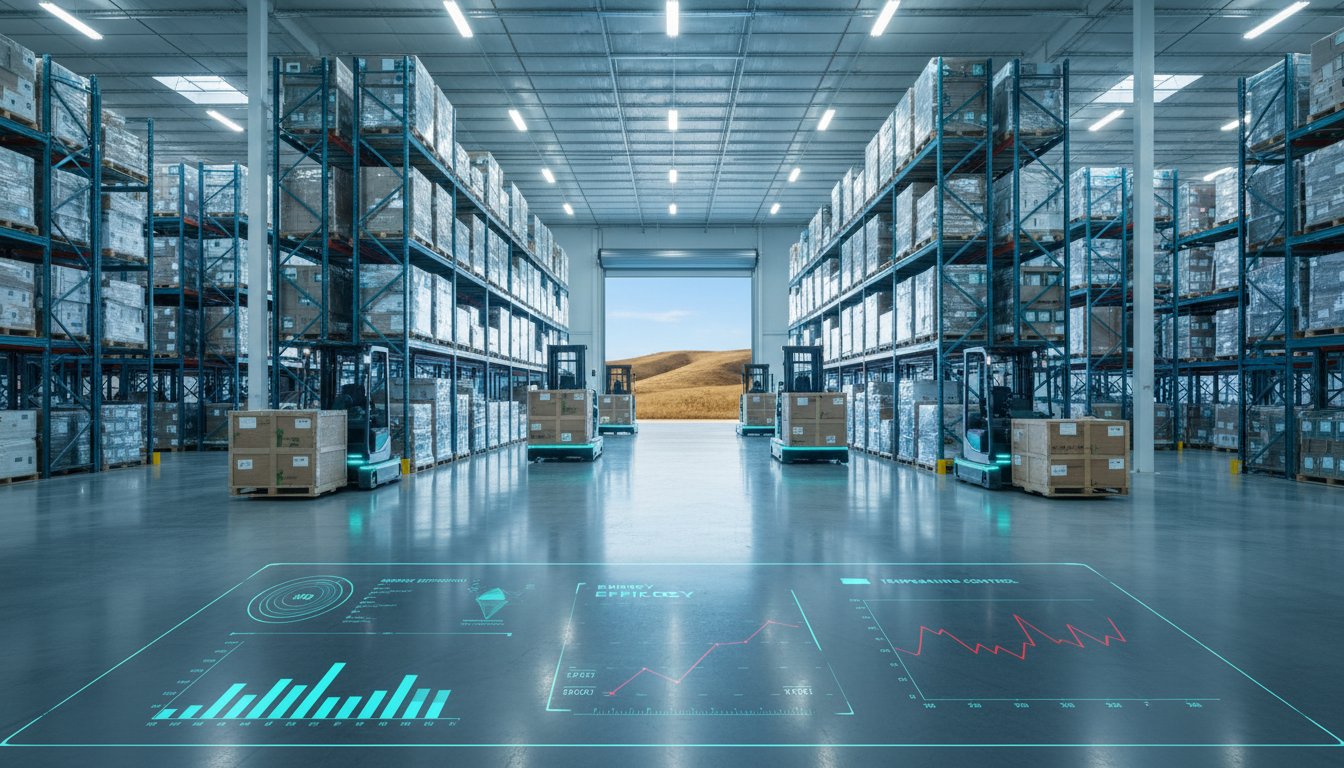
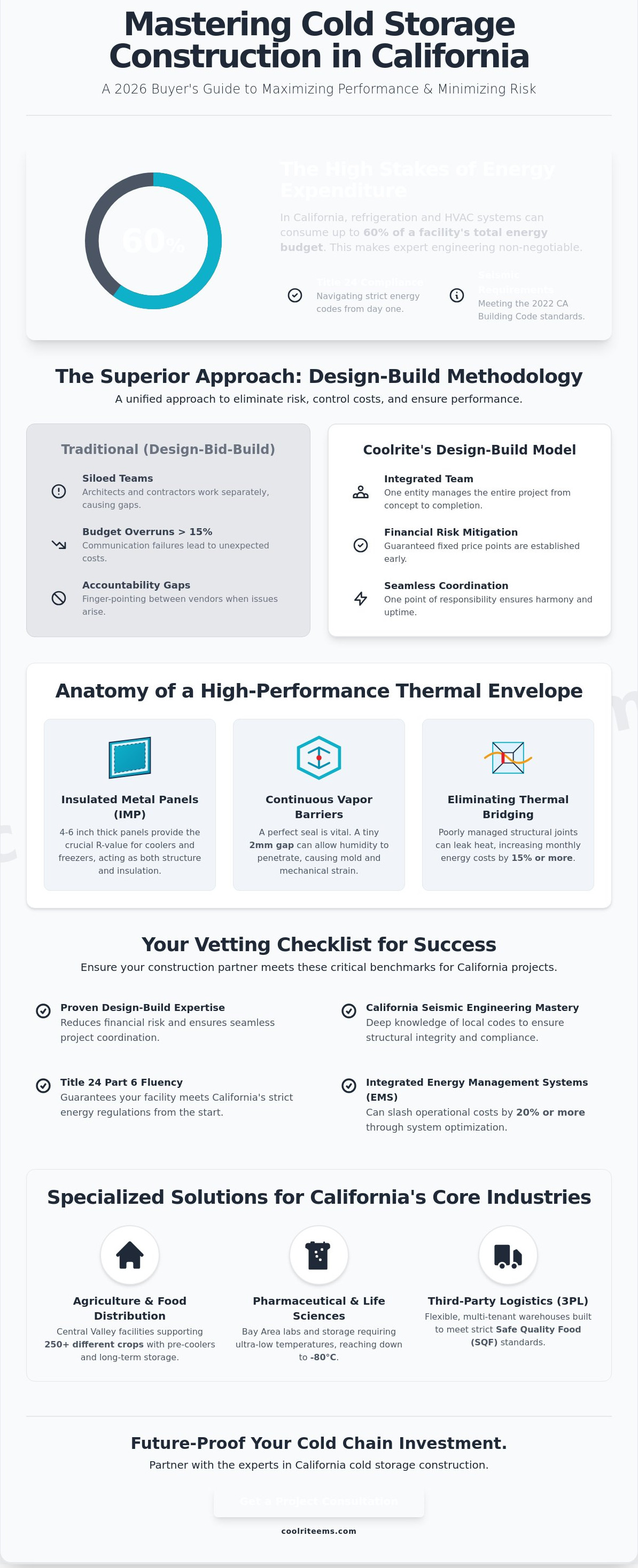
In California, industrial refrigeration and HVAC systems can account for up to 60% of a facility's total energy expenditure, according to data from the California Energy Commission. You've likely realized that building or upgrading a facility in this state requires more than just a standard contractor. It demands a partner who understands the intersection of strict Title 24 energy codes and the 2022 California Building Code seismic requirements. Selecting from the available cold storage construction companies is a critical decision that dictates your operational overhead and equipment longevity for the next two decades.
We agree that the risk of system downtime or regulatory non-compliance is a burden your bottom line simply cannot afford. This 2026 buyer's guide promises to equip you with the technical benchmarks and evaluation strategies needed to secure a facility that maximizes thermal performance while minimizing operational risk. We'll examine the specific certifications, advanced energy management systems, and total solution approaches that define a top-tier construction partner in today's demanding California market.
Key Takeaways
- Understand why the design-build methodology is the most effective model for reducing financial risk and ensuring seamless coordination in temperature-controlled projects.
- Identify the critical technical criteria for vetting cold storage construction companies, focusing on their expertise in California seismic engineering and diverse refrigeration systems.
- Learn to navigate the complexities of Title 24 Part 6 energy codes to ensure your new facility meets strict California regulatory standards from day one.
- Discover how integrating advanced energy management systems during the construction phase can optimize your thermal envelope and slash operational costs by 20% or more.
- Master the essential steps of site evaluation, from soil stability to utility access, to future-proof your investment against environmental and infrastructure challenges.
What Is a Cold Storage Construction Company?
A cold storage construction company provides the technical expertise required to build facilities that maintain strict temperature ranges. Unlike general contractors who focus on standard industrial shells, these specialists engineer the entire thermal envelope. This involves more than just adding insulation; it requires a total solution approach to moisture control, air pressure management, and thermal separation. Selecting experienced cold storage construction companies ensures that your facility operates with 99.9% uptime while protecting the integrity of your inventory.
Standard warehouse construction fails in cold chain applications because it doesn't account for the physics of heat transfer. When a building's interior is kept at -20°F while the California exterior reaches 100°F, the vapor pressure differential is immense. Specialized engineering prevents issues like floor heaving, where moisture in the soil freezes and expands, eventually cracking the concrete slab. Historically, the development of the Cool store has proven that precision in the vapor barrier is the only way to prevent structural decay and ice accumulation.
The Core Components of Cold Storage Facilities
Professional builders focus on three critical elements to ensure energy efficiency and longevity:
- Insulated Metal Panels (IMP): These act as both the structure and the insulation. Panels typically range from 4 to 6 inches in thickness to provide the necessary R-value for freezers or coolers.
- Vapor Barriers: A continuous seal is vital. Even a 2mm gap allows humidity to penetrate the envelope, leading to mold and mechanical strain.
- Thermal Bridging: Precision during assembly prevents heat from leaking through structural joints. Poorly managed thermal bridges can increase monthly energy costs by 15% or more.
Industries Served by California Cold Storage Builders
California's diverse economy demands specialized climate-controlled infrastructure across several sectors. In the Central Valley, cold storage construction companies support the distribution of over 250 different crops by providing rapid-cooling pre-coolers and long-term storage hubs. The San Francisco Bay Area relies on these builders for pharmaceutical and life sciences facilities that require ultra-low temperature environments reaching -80°C. Third-party logistics (3PL) providers also utilize these services to build flexible, multi-tenant refrigerated warehouses that meet strict SQF (Safe Quality Food) standards for public safety.
The Design-Build Methodology for Temperature-Controlled Facilities
Traditional design-bid-build models often create silos between architects and mechanical contractors, leading to cost overruns that can exceed 15% of the original budget. The design-build methodology integrates these phases into a single contract, streamlining the entire project from inception to completion. This unified structure is why leading cold storage construction companies now prioritize this model for California projects. It places the burden of technical performance and regulatory compliance on one entity, ensuring that the refrigeration system and the building envelope work in total harmony.
Utilizing a Progressive Design-Build framework allows facility owners to mitigate financial risk early in the lifecycle. Instead of managing multiple vendors, you benefit from a single point of responsibility. This is vital when integrating complex thermal systems that must meet 2026 energy codes. A turnkey solution covers everything from the first CAD drawing to final commissioning, preventing the communication gaps that typically delay facility handovers. The most reliable cold storage construction companies utilize this model to eliminate finger-pointing between trades and guarantee a fixed price point earlier in the process.
Pre-Construction and Conceptual Design
Bespoke facility design begins with a granular analysis of site-specific data. In California, this means accounting for microclimates where humidity levels can fluctuate by 40% within a single day. Engineers must evaluate the cold envelope to determine the most efficient workflow and rack configurations. Integrating critical hvac components into the initial architectural plan ensures that air distribution doesn't interfere with product movement. This phase sets the foundation for a facility that maintains strict temperature setpoints while minimizing energy consumption.
Managing the Construction Lifecycle
Precision during the build phase is non-negotiable. Specialized trades must coordinate the installation of vapor barriers and thick insulated metal panels with surgical accuracy. We focus heavily on sub-floor heating systems, which are essential in preventing frost heave that can destroy a concrete slab. Quality control extends to high-speed doors and loading docks, where air infiltration can account for 30% of a facility's cooling loss. Every seal and sensor must operate at peak efficiency from day one. To secure your infrastructure, you may want to explore a total solution approach for your next refrigeration project.
Evaluating Cold Storage Construction Companies: Key Criteria for Bay Area Projects
Selecting a partner for industrial refrigeration requires more than a general building license. Leading cold storage construction companies must demonstrate mastery over California’s stringent ASCE 7 seismic design categories. This ensures facilities in high-risk zones like the Hayward or San Andreas faults remain operational after a 6.5 magnitude event. Expert builders evaluate refrigeration cycles based on long-term ROI. Ammonia systems offer high efficiency for 100,000+ square foot facilities; transcritical CO2 systems provide a future-proof path for smaller footprints. A qualified contractor manages the transition between these technologies, ensuring the facility meets all California Title 24 energy efficiency standards regarding insulation R-values and fan speed controls.
Meeting strict construction timelines in high-demand markets like San Jose or Oakland requires aggressive project management. Local utility relationships are critical here. A builder should have a proven track record of coordinating with PG&E for grid interconnection to avoid the 12 to 18 month delays currently seen in substation upgrades. These connections ensure that when the facility is ready to pull its first thermal load, the power infrastructure is fully commissioned.
Local Expertise in Northern California
A cold storage contractor needs to account for the thermal delta between coastal fog in Oakland and the 100-degree heat of a Fresno summer. These microclimates dictate insulation thickness and compressor sizing. Verify that your builder holds a Class B General Building license and specialized C-38 Refrigeration certification. You should review case studies from projects in Sacramento or San Jose to confirm they can navigate local permitting queues. These processes often add 4 to 6 months to project timelines if the contractor doesn't have established local rapport.
Technological Integration Capabilities
Operational efficiency in 2026 hinges on data. Modern cold storage construction companies integrate advanced energy management solutions that allow for real-time monitoring of thermal loads and predictive maintenance. This technical integration supports Automated Storage and Retrieval Systems (ASRS), which require precise floor flatness tolerances within 1/8th of an inch over 10 feet. Reliable builders coordinate these requirements early in the design phase, preventing costly slab remediation during the final stages of the build.
How to Plan Your Build: From Site Selection to Title 24 Compliance
Successful cold storage projects begin with a rigorous site evaluation that goes beyond simple square footage. You must analyze soil stability and utility capacity before any concrete is poured. In California, soil conditions vary drastically, requiring geotechnical reports to determine if your foundation needs deep piers or soil stabilization to support the massive weight of high-bay racking. Experienced cold storage construction companies prioritize utility access early, as a 100,000 square foot freezer can require 2,500 to 4,000 amps of power. Ensuring the local grid can support your refrigeration load prevents costly delays during the final stages of the build.
Designing for thermal efficiency requires a total solution approach. You must focus on maximizing R-value while eliminating thermal bridging. This involves specifying high-performance insulated metal panels (IMPs) and ensuring vapor barrier continuity at every junction. Minimal air infiltration is the goal. Even a small gap in a door seal or a wall-to-roof transition can increase energy costs by 15% and lead to dangerous ice buildup. Your plan should include a detailed commissioning phase where third-party experts verify that every system, from the compressors to the high-speed doors, performs to the original design specifications.
Navigating California Regulatory Standards
Title 24 Part 6 energy code requirements are some of the strictest in the nation. To remain compliant, your facility must utilize specific refrigeration energy management systems, including variable frequency drives (VFDs) on evaporator fans and high-efficiency condenser designs. Seismic safety is equally critical. All refrigeration racks and piping systems must meet ASCE 7-22 standards for seismic bracing to prevent catastrophic leaks during an earthquake. Additionally, fire suppression systems for high-piled cold storage must be designed for specific commodity classifications, often requiring in-rack sprinklers if storage heights exceed 25 feet.
Site-Specific Challenges in the Bay Area and Sacramento
Building in dense urban zones like Oakland or San Francisco presents significant logistical hurdles. Limited staging areas mean deliveries must be timed with precision to avoid local traffic congestion. In contrast, projects in the Sacramento River Delta face unique soil challenges. The high peat content in this region often requires specialized foundation engineering to prevent settling. To combat the intense heat of the Central Valley, optimizing building orientation is essential. Reducing solar gain on loading docks and southern-facing walls can lower the peak cooling load by 10% during summer months.
Plan your next facility with a partner that understands California's complex regulatory landscape. Contact our experts to discuss your total solution for cold storage construction today.
Future-Proofing Your Facility with Integrated Refrigeration and EMS
Integrating the CoolriteEMS Controller during the initial build is the most efficient path to long-term operational success. Leading cold storage construction companies recognize that retrofitting energy management systems later often results in higher labor costs and disrupted workflows. By installing the system during the construction phase, you ensure that every sensor and control point is optimized for your specific floor plan from day one. This proactive approach allows for seamless wiring and hardware placement before the walls are sealed.
Smart control logic allows facility managers to reduce operational costs by 20% or more. This isn't a vague estimate; it's achieved through precise load shedding and optimized defrost cycles that prevent unnecessary energy spikes. The system monitors ambient conditions and internal temperatures in real-time, adjusting refrigeration output to match actual demand rather than running on a generic, inefficient schedule. This precision ensures your mechanical systems aren't working harder than necessary, extending the lifespan of your compressors and fans.
Protecting your inventory is a top priority for any California operator. CoolriteEMS prevents product loss through a robust alert system that sends SMS and email notifications the moment temperatures deviate from set parameters. You can monitor your facility remotely from any device, ensuring total visibility without needing to be on-site 24/7. This level of oversight is essential for maintaining the cold chain integrity required in the 2026 regulatory environment. Local PLC control provides an additional layer of reliability, as the system operates securely without depending on a constant internet connection.
Eliminating Subscription Fees and Security Risks
Many modern controllers rely on cloud-based platforms that require monthly subscription fees. CoolriteEMS operates differently. It's a secure, one-time investment that utilizes local PLC control. This means your facility continues to operate safely even if your internet connection fails. You own your data and your control logic, removing the security risks associated with third-party cloud vulnerabilities. We provide customizable logic tailored to your specific inventory, whether you're storing pharmaceuticals or fresh produce. This precision reduces long-term maintenance costs by identifying equipment wear through predictive data before a breakdown occurs.
Maximizing ROI on Your Construction Investment
Calculating the payback period for an integrated energy management system is straightforward when you factor in energy savings and reduced insurance premiums. High-quality monitoring prevents catastrophic equipment failure, which can cost hundreds of thousands in lost stock and emergency repairs. When cold storage construction companies embed these systems into the project scope, the facility achieves a faster path to profitability. Reliable infrastructure isn't just about the walls and insulation; it's about the intelligence that keeps the system running at peak performance. Schedule a demo of the CoolriteEMS system today to see how we can optimize your new California facility.
Securing Your Infrastructure for the 2026 Market
Success in California's temperature-controlled sector requires a strategy that balances strict Title 24 energy standards with operational longevity. Selecting the right partner among cold storage construction companies determines whether your facility remains a high-performance asset or becomes a maintenance burden. Prioritize the design-build methodology to streamline project timelines and ensure your refrigeration systems integrate seamlessly with modern energy management protocols. Since 1995, Coolrite EMS has delivered these technical solutions across California, providing the local expertise needed to navigate complex regulatory landscapes.
Our approach centers on reliability and data-driven performance. We utilize proprietary CoolriteEMS technology to provide 24/7 monitoring, ensuring your inventory stays protected and your energy costs remain optimized. By focusing on a total solution from initial site selection to long-term preventative maintenance, we help you build a facility that's ready for the demands of 2026 and beyond. It's time to transition from planning to execution with a partner who understands the precision required for high-stakes commercial infrastructure.
Take the next step in optimizing your facility's performance. Request a Consultation for Your Cold Storage Project to discuss your specific requirements. We're ready to help you build a more efficient future.
Frequently Asked Questions
What is the average cost per square foot for cold storage construction in California?
Cold storage construction in California typically ranges from $250 to $450 per square foot according to 2024 industry cost benchmarks. These figures vary based on whether you're building a +34°F cooler or a -10°F freezer. Higher costs often reflect the specialized insulation, reinforced floor slabs, and advanced refrigeration systems required to meet California's strict energy standards. We focus on delivering optimized designs that balance these initial investments with long-term energy savings.
How long does it take to build a 50,000-square-foot cold storage warehouse?
A 50,000-square-foot cold storage warehouse generally takes 10 to 14 months to complete from groundbreaking to commissioning. This timeline accounts for lead times on specialized equipment like insulated metal panels and refrigeration units. Experienced cold storage construction companies manage these schedules by integrating design and procurement phases to prevent delays. Our methodical approach ensures every phase moves seamlessly from site preparation to final thermal testing and equipment startup.
Does California Title 24 apply to existing cold storage renovations?
California Title 24, Part 6, applies to existing cold storage renovations when the project involves replacing more than 50% of the lighting fixtures or modifying the building envelope. Renovations must meet specific insulation R-values and mandatory automatic shut-off controls for refrigeration fans. We ensure every retrofit maintains compliance with the 2022 Building Energy Efficiency Standards. This technical precision protects your investment while reducing the environmental impact and operational costs of your facility.
What is the difference between a cold storage contractor and a general contractor?
Cold storage contractors specialize in thermal envelope integrity and vapor barrier continuity, whereas general contractors often lack expertise in sub-slab heating and complex refrigeration cycles. Choosing specialized cold storage construction companies ensures your facility avoids common failures like floor heaving or ice buildup. Our total solution approach focuses on the technical precision required for airtight environments. We prioritize reliability and technical competence to ensure your infrastructure operates without any interruption.
Can I convert a standard warehouse into a cold storage facility?
You can convert a standard warehouse into cold storage, but it requires installing a box-in-a-box structure or significant envelope upgrades. Most dry warehouses lack the floor slab insulation necessary to prevent permafrost, so you'll need to excavate or install a heated plenum. We analyze the existing structure's load-bearing capacity to determine if it can support industrial evaporators. This process transforms underutilized space into a high-performance, temperature-controlled environment that meets modern storage demands.
How do I choose between an ammonia and a Freon-based refrigeration system?
Ammonia systems offer 15% better energy efficiency than Freon-based systems and have a Global Warming Potential of zero. While ammonia requires higher initial capital and strict CalARP safety compliance, it's the standard for facilities over 50,000 square feet. Freon or synthetic refrigerants suit smaller footprints because they've lower installation costs and fewer regulatory requirements. We help you choose a bespoke refrigeration solution that aligns with your specific operational goals and long-term sustainability targets.
What are the seismic requirements for cold storage in the Bay Area?
Cold storage facilities in the Bay Area must comply with Risk Category III or IV seismic design requirements as outlined in the California Building Code. This involves specialized racking systems with heavy-duty base plates and seismic bracing for all overhead refrigeration piping. Our designs account for the high spectral acceleration values typical of the San Andreas Fault system. We prioritize structural continuity to ensure your critical infrastructure remains functional and safe after a seismic event.
Related: See our transparent pricing for refrigeration repair, browse customer success stories, or get a quote at your local service area.